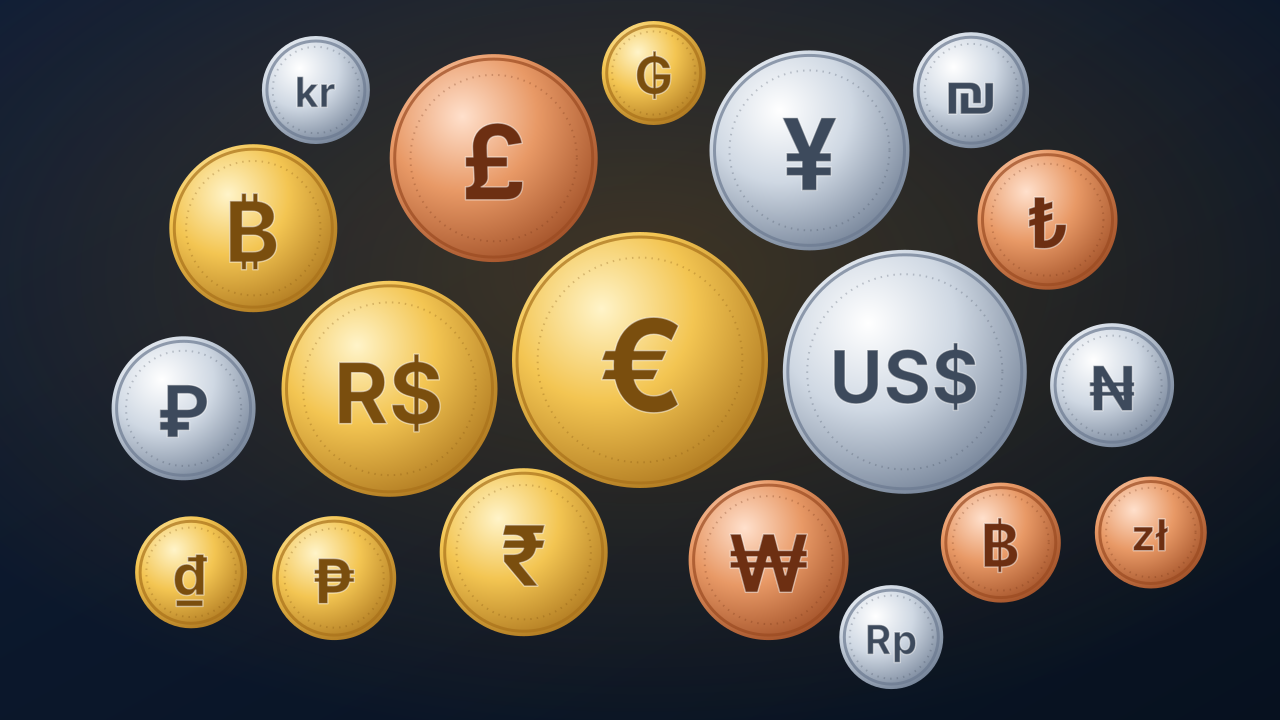
ISO 4217 currency codes: symbols, territories and decimals
Look up currency codes such as USD, EUR and BRL, then understand why a code, a symbol and a displayed amount are different things.
|
BRL — Brazilian real
|
1 | BRL | Brazilian real | R$ | Brazil | 2 |
|---|---|---|---|---|---|---|
|
USD — United States dollar
|
2 | USD | United States dollar | US$ | United States | 2 |
|
EUR — Euro
|
3 | EUR | Euro | € | Eurozone | 2 |
|
GBP — Pound sterling
|
4 | GBP | Pound sterling | £ | United Kingdom | 2 |
|
JPY — Japanese yen
|
5 | JPY | Japanese yen | ¥ | Japan | 0 |
|
CNY — Chinese yuan
|
6 | CNY | Chinese yuan | ¥ | China | 2 |
|
CHF — Swiss franc
|
7 | CHF | Swiss franc | CHF | Switzerland | 2 |
|
CAD — Canadian dollar
|
8 | CAD | Canadian dollar | C$ | Canada | 2 |
|
AUD — Australian dollar
|
9 | AUD | Australian dollar | A$ | Australia | 2 |
|
NZD — New Zealand dollar
|
10 | NZD | New Zealand dollar | NZ$ | New Zealand | 2 |
|
ARS — Argentine peso
|
11 | ARS | Argentine peso | $ | Argentina | 2 |
|
CLP — Chilean peso
|
12 | CLP | Chilean peso | $ | Chile | 0 |
|
COP — Colombian peso
|
13 | COP | Colombian peso | $ | Colombia | 2 |
|
MXN — Mexican peso
|
14 | MXN | Mexican peso | $ | Mexico | 2 |
|
PEN — Peruvian sol
|
15 | PEN | Peruvian sol | S/ | Peru | 2 |
|
UYU — Uruguayan peso
|
16 | UYU | Uruguayan peso | $ | Uruguay | 2 |
|
BOB — Bolivian boliviano
|
17 | BOB | Bolivian boliviano | Bs | Bolivia | 2 |
|
PYG — Paraguayan guaraní
|
18 | PYG | Paraguayan guaraní | ₲ | Paraguay | 0 |
|
INR — Indian rupee
|
19 | INR | Indian rupee | ₹ | India | 2 |
|
KRW — South Korean won
|
20 | KRW | South Korean won | ₩ | South Korea | 0 |
|
SGD — Singapore dollar
|
21 | SGD | Singapore dollar | S$ | Singapore | 2 |
|
HKD — Hong Kong dollar
|
22 | HKD | Hong Kong dollar | HK$ | Hong Kong | 2 |
|
TWD — New Taiwan dollar
|
23 | TWD | New Taiwan dollar | NT$ | Taiwan | 2 |
|
THB — Thai baht
|
24 | THB | Thai baht | ฿ | Thailand | 2 |
|
IDR — Indonesian rupiah
|
25 | IDR | Indonesian rupiah | Rp | Indonesia | 2 |
|
MYR — Malaysian ringgit
|
26 | MYR | Malaysian ringgit | RM | Malaysia | 2 |
|
PHP — Philippine peso
|
27 | PHP | Philippine peso | ₱ | Philippines | 2 |
|
VND — Vietnamese đồng
|
28 | VND | Vietnamese đồng | ₫ | Vietnam | 0 |
|
ZAR — South African rand
|
29 | ZAR | South African rand | R | South Africa | 2 |
|
EGP — Egyptian pound
|
30 | EGP | Egyptian pound | E£ | Egypt | 2 |
|
NGN — Nigerian naira
|
31 | NGN | Nigerian naira | ₦ | Nigeria | 2 |
|
TRY — Turkish lira
|
32 | TRY | Turkish lira | ₺ | Turkey | 2 |
|
RUB — Russian ruble
|
33 | RUB | Russian ruble | ₽ | Russia | 2 |
|
PLN — Polish złoty
|
34 | PLN | Polish złoty | zł | Poland | 2 |
|
SEK — Swedish krona
|
35 | SEK | Swedish krona | kr | Sweden | 2 |
|
NOK — Norwegian krone
|
36 | NOK | Norwegian krone | kr | Norway | 2 |
|
DKK — Danish krone
|
37 | DKK | Danish krone | kr | Denmark | 2 |
|
CZK — Czech koruna
|
38 | CZK | Czech koruna | Kč | Czechia | 2 |
|
HUF — Hungarian forint
|
39 | HUF | Hungarian forint | Ft | Hungary | 2 |
|
ILS — Israeli new shekel
|
40 | ILS | Israeli new shekel | ₪ | Israel | 2 |
|
AED — UAE dirham
|
41 | AED | UAE dirham | د.إ | United Arab Emirates | 2 |
|
SAR — Saudi riyal
|
42 | SAR | Saudi riyal | ﷼ | Saudi Arabia | 2 |
|
QAR — Qatari riyal
|
43 | QAR | Qatari riyal | ﷼ | Qatar | 2 |
|
XOF — West African CFA franc
|
44 | XOF | West African CFA franc | CFA | West Africa | 0 |
|
XAF — Central African CFA franc
|
45 | XAF | Central African CFA franc | FCFA | Central Africa | 0 |
|
XAU — Gold (troy ounce)
|
46 | XAU | Gold (troy ounce) | XAU | Precious metal | 2 |
No item matched. Clear a filter or shorten the search.
About
Use the code when the currency needs to be unambiguous
ISO 4217 is the standard used to identify currencies with alphabetic and numeric codes. A three-letter code such as USD, EUR or BRL travels much more reliably than a currency symbol: $ can refer to several currencies, while USD identifies the United States dollar in a data field, invoice or exchange-rate feed.
This table is intended for quick lookups. Search the code when it appears in a bank export or API response, search the currency name when you are preparing a form, and filter by territory when several rows look alike. The ISO 4217 maintenance information published by SIX is the primary reference when a financial or compliance workflow needs the current official record.
Code, symbol and currency name are not interchangeable
A currency code is the stable identifier used by systems; a symbol is a compact display choice; a name is what a reader recognises in normal language. An amount written as $100 is incomplete without context. USD 100, CAD 100 and AUD 100 use the same symbol but represent different currencies.
For storage, integrations and exports, retain the ISO code alongside the numeric amount. Choose the symbol only when the audience and the surrounding currency context make it clear. A product page can show a familiar symbol, while a spreadsheet sent across countries is usually clearer with the code.
What the territory column does and does not say
The territory column helps narrow a lookup, but a territory and a currency are not a one-to-one rule. The euro is used across more than one country, while some territories use a currency issued elsewhere. A code therefore identifies a currency, not a customer location, payment method, tax treatment or legal residence.
This is especially useful in international catalogues. Do not infer a person’s country from a currency code, and do not assume that a payment provider supports every currency used in a territory. Confirm the rules of the payment, accounting or reporting system that will process the amount.
Minor-unit digits help format an amount
The decimals column indicates the usual number of minor-unit digits associated with the currency record. It helps a system decide how to present or validate a value: two digits are common, while currencies such as JPY are ordinarily shown without fractional units.
It is not an instruction to round every calculation in the same way. A payment processor, tax rule, cash transaction or accounting policy can impose its own rounding and amount rules. Keep the numeric value, currency code and the applicable business rule together instead of relying on a display format alone.
How to read a code without guessing from its letters
Many alphabetic codes combine a country prefix with a currency-related letter, which makes examples like BRL and JPY easy to remember. That pattern is helpful but not a universal decoding rule. Shared currencies, historical changes and special codes mean the official record should settle any case that matters.
The table can also include entries that people encounter in market data but should not mistake for ordinary legal-tender currencies. A cryptocurrency label or a commodity-style market reference is not automatically an ISO 4217 currency code. Treat the row as a lookup aid and check the source required by the system receiving the value.
Common situations where this list saves a correction later
- Matching an exchange-rate response that returns CHF or MXN instead of a full name.
- Adding a currency field to a database without using an ambiguous symbol as the key.
- Formatting a checkout or report after confirming the code and the usual minor-unit digits.
- Checking whether two similar-looking amounts actually use the same currency.
For a live exchange rate, a conversion result or a chargeable amount, this page is only the identifier reference. Obtain the rate, fees, effective date and payment rules from the provider or institution relevant to that transaction.
Frequently asked questions
What currency uses BRL?
BRL is the ISO 4217 alphabetic code for the Brazilian real. The symbol commonly displayed for it is R$, but the code is clearer in systems and cross-border documents.
Why should software store USD instead of $?
The dollar symbol is shared by several currencies. USD specifies the United States dollar, so it remains understandable when data moves between applications, countries and teams.
Does zero decimals mean a currency has no smaller unit?
No. It describes the usual minor-unit handling in the currency reference. The correct treatment of a payment or accounting amount can still depend on the processor, regulation and business rules involved.